Picture
So I got an email from Disney entitled, “Celebrate Mother’s Day the Disney Way.”  I was surprised that the picture they used was for Cinderella’s Fairy Godmother. My wife and I got to talking about it about Disney’s lack of maternal figures, (yes a strange  conversation topic, but I'm strange). Cinderella and Snow White’s mother were evil queens and Jasmine, Nemo, Belle, Ariel, Pinocchio, Pocahontas, and a host of other characters had only fathers. But, we realized that there were also some pretty strong female role models.  This is list I came up with.  See if you have any to add.

Picture
Helen Parr, Elastagirl-The
Incredibles

She can bring home the bacon, fry it up in a pan, and catch burglars on put them in the can.  Mrs. Incredible Nee ElastaGirl has the whole package.  In addition to her powers, Helen is also an experienced jet pilot (coming from having a close friend who flew her around the world when she was a Super). Her sharp wit and superb espionage skills, as well as her experience as a superhero, make her an excellent tactician and leader. I haven’t even got to the fact that her super suit is designed to stretch as far as she can and still retain its shape, is virtually indestructible “yet it breathes like Egyptian cotton."

Picture
Eudora/Mamma Ode--Princess and the Frog

Although Tiana’s father, James, is given the credit for his daughter’s strong work ethic, we cannot forget her mother Eudora
(voiced by Oprah Winfrey), who helped raise the Frog Princess. 
And while Eudora only gets one real scene, her supportive nature
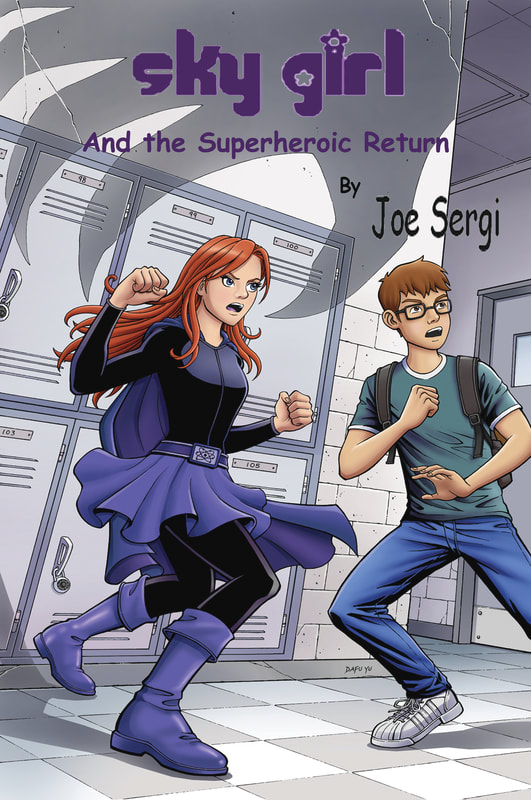
certainly comes through.  Plus, if you have Oprah in your corner, how can you lose?  Now, if only she would endorse Sky Girl.


I also list Mama Odie, voiced by Jennifer Lewis,because she is at least as relevant as Cinderella’s Fairy Godmother. “Open up de windows/bring in de light!”

Picture
Kala--Tarzan

No list would be complete without Kala (voiced by Glenn Close), Tarzan's adopted
mother who found and raised him after losing her last biological son to Sabor. It wasn’t easy being Tarzan’s mother.  Kala proves that genetics are not necessary to create a maternal bond.  She protects him until the day he is strong enough to protect himself.  Her anthem is Phil Collins, “You’ll be in my heart”, which won both the Oscar and the Golden Globe for best Song in 1999.  

Picture
Mrs. Jumbo—Dumbo

Speaking of protective mother, Mrs. Jumbo get so angry at a group of boys for making fun of her son, she loses her temper and is locked up and deemed mad.  But, we see from the look in her eyes that she would do it again when Timothy Mouse takes Dumbo (Jumbo Jr) to see her. “Plus she gets to sing a great Oscar Award winning song, “Baby Mine.”  (It won in 1941 if you are keeping track). Mrs. Jumbo was voiced by Verna Felton, who was uncredited.

Picture
Fa Li and Grandmother Fa—Mulan

Mulan’s mother and grandmother want what’s best
for her.  Of course that doesn’t
necessarily align with Mulan’s goals, but that’s what family is all about.


Picture
Mrs. Davis–Toy Story

Andy’s mother is a single mom raising two
kids. And although she really
doesn’t have a huge role in the films, she has a big presence. 
Admit it, you bawled like a baby when she had to send her child Andy off to school.  As a parent, I can
relate. 

As long as we are on the subject of Toy Story, honorable mention goes to  Mrs. Potato Head, who, along with her husband, adopted the three green aliens.

Picture
Sarabi—TheLion King
Nala—The Lion King
2, Simba's Pride


Sarabi -The venerable wife of Mufasa, queen of the Pride Lands, mother of Simba.  During the Lion King Simba ends up with Nala , who gives birth to
Kiara.  Sarabi and Nala are instrumental to both stories. 

Picture
Nani--Lilo

Nani (voiced by Tia Carrere) is technically Lilo’s sister. But, as in many Disney stories, Lilo and her sister are orphans. So, Nani has to step up and teach her sister that Ohana mean family. And family means nobody gets left behind, or forgotten. 


Picture
Perdita--101 Dalmatians

Perdita is the deuteragonist from the film 101 Dalmatians. She is the pet of Anita, wife of Pongo, and the mother of fifteen Dalmatian puppies as well
as adoptive mother of other eighty-four puppies. Perdita along with Pongo goes on the heroic journey to rescue the puppies. Did you know that are 6,469,952 spots on the Dalmations? Pongo has 72 spots, Perdita has 68, and each puppy has 32.

Picture
Ariel--Little Mermaid II, Return to the Sea


I’m not sure if you have seen the Little Mermaid II, Return to the Sea, but it’s a fine tale of mother/daughter relationships
(and Eric gets to be more than furniture).  Ariel’s daughter is Melody, by the way.


Picture
Bambi’s Mother--Bambi

I end with Bambi’s Mother. 
Bambi’s mother is never given a name in either the movie or the book. (Fans affectionately refer to her as Fawn).  But, not having a name is the least of her problems. If this scene doesn’t get you—you have no heart.


Did I miss anyone?

Happy Mother's Day!


Picture
Just a quick reminder that Rex, Zombie Killer by Rob Anderson and Dafu Yu comes out tomorrow.  I previously wrote about how to pre-order the book here.

The book will be in stores tomorrow.  You should buy it.  It's good.  but,don't take my word for it.  Look at all of these amazing reviews (from their website):

Praise for Rex, Zombie Killer #1

"...the talented Rob Anderson offers a wonderfully fresh and different take...charming
and highly entertaining...it's pure fun, but so much more...Dafu Yu's artwork is
bright and energetic..."
-- Lee Gambin, Fangoria magazine

Rated 9 out of 10! "Rob Anderson has created a simple, straightforward story of heroism and camaraderie but spares us the cutesy  pretentiousness inherent of most animal tales...If that final splash page is any indication, Rob Anderson has much more story to tell, and it will only get better from here. I highly recommend this."
-- Jeff Marsick, Newsarama

"...one of the most unique horror comics in years... It does feel like a story that takes place in the universe of The Walking Dead right down to the character interactions...this comic is FUN, plain and simple."
-- Spencer Perry, Shock Till You Drop


"Anderson's Rex, Zombie Killer is that rare breed, a fresh take on the zombie genre. He endows his animal protagonists with heart and intelligence, a winning combination that leaves you wanting to read more, more, more!"
-- Corinna Bechko (Writer, Betrayal of the Planet of the Apes)

"What’s great about Rex is that it gives us a view of Armageddon through a fresh set of eyes...watching this gang of misfit creatures try to navigate danger (survive the zombies, encounter a biker gang) is a real hoot...and I can’t wait for the next issue. Like the little animals running through it, Rex has a lot of heart."
-- Mr. Pasty, Ain't It Cool News

"...solid and fast-paced, with good character development and funny moments thrown in...the $3.50 price tag is a sweetheart deal."
-- Kurt Anthony Krug, Comic Buyer's Guide

"...the action starts up right away and never really backs off...a very well written and engaging story that goes far beyond just a simple gimmick...I loved this book, and I think you will too."
-- Bob Leeper, Nerdvana

"It’s We3 meets The Walking Dead, as this one-shot follows a group of animals trying to survive zombies."
-- Johanna Draper Carlson, Comics Worth Reading

"Slick art...Really well written...definitely doesn't skimp on the zombie action...a
book that keeps you turning pages and leaves you wanting more."
-- Charles Suffel, Pop Culture Network

"If you enjoyed Beasts Of Burden, and if you love zombies, then I have just the comic for you...This story is a fresh and very interesting take on the zombie genre...I
happily recommend this title."
-- McPierce, A Little Dead podcast

"For decades, we've seen the grim results of confrontations between zombies and human beings--but Rob Anderson and DaFu Yu reveal that the walking dead can be just as troublesome for the animal  kingdom!"
-- Cliff Biggers, Comic Shop News

"We may have found a zombie comic the whole family can enjoy...how can you NOT like a gorilla with a baseball bat clobbering no-good greasers while the undead are swooping down on them? You CAN'T not like it!"
-- Michael Holmes, Zurvived: Episode 41

"The book really sings! ...a fun concept, great execution...and it’s got heart. And that’s what a lot of comics  today seem to be missing—-a good story, well told, with a reason to exist. Rob and DaFu are actually telling a story that’s about the human spirit..."
--  Andy Schmidt (Writer, 5 Days to Die, former Marvel & IDW Editor)

"The idea is brilliant...art here is top notch...This is an action-packed zombie story...[and] despite being a first issue, we get a really complete story."
-- Rob McMonigal, Panel  Patter

"Just think how shocking it would have been if an ape with a Louisville Slugger came blasting out of Herschel's barn...Not only is it a  unique take on the zombie sub-genre, but it's one helluva bargain at just $3.50 for a book over 50 pages long!"
-- Doctor Gash, Dread Central

"...a dog’s eye view of the genre...makes for fresh storytelling...Anderson weaves a charming yet horrific tale...Yu does a fantastic job of showing the world through the eyes of the animals..."
--Shaun Daniels, Horror Haven Reviews

"...[the] interior art is done by DaFu Yu who has a very unique style...I wouldn’t be
surprised if DaFu Yu becomes a household name in the future...if there is a
follow up, which I hope there is, I’ll put my pre-order down on it the day it’s
announced!"
-- Skott Jimenez, ComicBooked.com

"[Rex, Zombie Killer] proves that heroines don’t need to wear high heels and capes...Buttercup the Corgi is sweet and brave in this story...I couldn’t help but tweet, 'Go, Buttercup! Go!' when I got to the climactic scene..."
-- Elizabeth Amber, Amber Unmasked

"A fun twist on the zombie genre...it has real heart...I want to see what happens next!"
-- Mike Raicht (Writer, Stuff of Legend, The Pack, Godzilla: Legends)

"The character designs are great, the zombies look GORE-Geous, and the consistency from panel to panel is spot on. The writing is full of action...[and] tells a story about survival on a different level than what we are bombarded with every month."
--  Decapitated Dan, From the Tomb Magazine

"Rex, Zombie Killer features a gorilla who fights zombies with a baseball bat.
But, he's not Rex. Rex is a talking dog. Which means this might be the greatest
idea since Hef said, 'add a naked girl in the centerfold.'"
-- Forces of Geek

"...a quick-paced story which lives up to the premise...a pleasure to read...a great start to another innovative creator-owned series which deserves the attention of the quality-seeking comic fan..."
-- Alex Widen, Examiner.com

"Rex isn't like any other zombie story out there....Before you know it, you'll be
falling in love with the characters and if you're anything like me, cheering
them out loud... It's true. If you'd been in my bedroom while I was reading
this, you'd have heard me muttering, 'Go, Buttercup..Go...' You'll be cheering
them on and then looking at your own pets just a little bit closer."
-- Life with Katie

"My pick of the month!...DaFu's art is absolutely gorgeous...really structured and meticulous...a really cool book!"
-- Mike Gallagher, Comic Geek Speak

"What if Homeward Bound had zombies in it?...Anderson really brought different
personalities to all of these animals...there's clearly more to each of them
than the basics of their breed... This is a heartfelt tale about a group of
animals in search for a home.  Anyone that's ever rescued a pet will find a
connection to one of the creatures in this comic.  The fact that they fight
zombies is a plus..."
-- James Ferguson, Horror Talk

"If you love animals, you’ll enjoy this book. If you love zombie-themed worlds, you’ll enjoy this book. If you love a great illustrated comic, you’ll love this book...I can’t say enough good things about this one..."
-- Stuart Conover, BuyZombie.com

"I  really enjoyed this...and I guess I have to say that I was really surprised that
I enjoyed it...it has an awesome hook...and beyond that I really liked the team
dynamic between all the animals."
-- Dan Horn, Comic Book Bin podcast

"Dafu Yu, whose art is clean and crisp...is a very nice companion to Anderson's story, which despite the dark nature in the subject is ultimately a story of hope that Yu expresses in the characters to great  effect..."
-- J.R., Game On! Comics

"A zombie comic that's going to the dogs!"
-- Matman, Secret Identity Podcast
Pick it up in shops starting tomorrow.  If you are in the Virginia Area, Rob will be signing at Laughing Ogre Comics on Free Comic Book Day.
 
 
Picture
This Sunday, April 22, is the is the International Day of the Book Festival. The festival is held from 11 AM to 4 PM  on Howard Avenue in  Kensington Maryland.  Here is a description of the show from http://www.dayofthebook.com/:

  • This afternoon street festival celebrates the International Day of the Book with live music, author readings, open mic, activities for children and adults, storytellers, ...and books, books, books! Local authors, bookartists, publishers, booksellers, and literary groups line Howard Ave in Historic Old Town Kensington to show, sell, and discuss their works. All activities are free, rain or shine. Come celebrate with us!

This has always been a fun show for me to do.  Since it is local, I usually ending up seeing old friends that I haven't connected to in a while.  I will have a table again this year and will have copies of all of my books for sale. I also will have free masks and superhero certificates (left over from my Sky Girl book tour) so bring the kiddies by if they are feeling Superheroic.  Information and directions can be found at http://www.dayofthebook.com/

See you there!
 
 
Picture
This panel featured Steve Kriozere, the Executive Producer and  co-creator of Femme Fatales with an impressive resume. I thought this was going to be a how to with a panel of creators. Instead, Kriozere told us the story of  how he became a television writer, which ended up being both fun, entertaining, and  surprisingly informative. Here are some highlights:

Picture
Kriozere broke into the business by working as a production assistant on Blossom. His job was to basically bring Mayam Bialik’s lunch and Joey Lawrence’s weight equipment. (He also noted that he made more money caddying.) Bill Bixby was the director of the show and the Geek in Kriozere thought that was kind of awesome.  He also told a funny story about the time he met Mr. Rogers.

Picture
At that time, the best way to break into television was to write an episode for an existing show and then try to get an agent (that’s referred to as a spec script). He said he wrote A spec for the X-Files and that got him the attention of David Peckinpah and hired him to write an episode of Sliders. (He was paid $25,000). He was so excited that he asked if he could watch them film the episode. They said yes, and he was amazed to see that everything he wrote had  changed. In fact,he was even more surprised to find out that his script, which involved an alternate reality of zombies, was used to create the “Jump the Shark” episode of the series. At least he got to meet both Sabrina Lloyd and Kari Wuhrer.

Picture
He mentioned that the best way to break in now is to write an original pilot or feature film. And that now, like then, it is very hard to get your first credit. It’s hard to stay in. Still, Kriozere recently celebrated his 16th year in the Writer’s Guild. Over that time, he worked on episode of Team Knight Rider (which was fun because he loved the original television show and he also worked with Goodman, who would later become the head writer on Family Guy), Nightman, Viper and Setinel (with Howard Chaykin) and eventually he became a staff writer on VIP. (Kriozere explained that there are different levels of writers from Executive Producer to Show Runner to Staff Writer.)  He had a few funny stories about Bruce Campbell, Lee Majors, and Mark Hamill.  After that, Kriozere worked on several seasons of NCIS. He told a great story about how he took a tour of the morgue by Los Angeles County Coronor and NCIS consultant, Craig Harvey and about how he brought a date. Kriozere then worked on Necessary roughness and Castle.  He also mentioned, without a name, a pilot that is being considered (he promised that we could all go to the filming if it gets picked up).

Picture
Kriozere is also the director/co-creator of Femme Fatales on Cinemax. The show, which comes from the creators of Femme Fatales Magazine, is a new late-night anthology series about powerful, sexy and dangerous women. Women find extraordinary ways of coping with their problems, channeling their survival instincts and bringing out their inner guile.

Kriozere mentioned that the double sized season finale features a costumed superheroine named Libra and that he got Bob Layton (or Iron Man “Demon in a Bottle” and Valiant fame) to draw it. It airs on 8/12/2012. We also got to see a sizzle real for the show. You can watch it below.


Afterwords, he answered some questions
  • Someone asked if it was essential for a want-to-be screenwriter to live in LA. Kriozere replied that it certainly isn’t necessary if you want to write feature films, but is pretty necessary if you want to write for television.
  • Someone asked the best way to break in.  Kriozere responded that you should write a pilot episode.  Then, you should rewrite it again, because it probably is really bad. (He also said that you have to decide if you want to focus on half hour or hour shows.) Then when your script is done, you should start looking for an agent and there are lots of places online to find agents that are accepting clients.
  • Someone asked about using real people’s names.  Kriozere said it was okay of there was more than one, but if there is only one person with that name, you have to change it.  He told the story about how he named a character after his friend, but there was only one—so they made him change it.
  • I asked him to recommend a book or two on mechanics and to help someone become a better writer (I used McKee’s Story as an example, which he agreed with.) He responded that Adventures in the Screen Trade by William Goldman is a great book. He also recommended the Twilight Zone Companion. He stated that he certainly would not recommend “how to” books or going to film school.
  • Someone asked what the most important skill is that a writer needs.  He responded that it is to get the voices of the characters right. He used NCIS as the example and walked through each member of the cast.
  • He ended the panel with a blooper reel from Femme Fatales. All in all an enjoyable panel.
He ended the panel with a blooper reel from Femme Fatales.

All in all an enjoyable panel.
 
 
Picture
A little note before I begin. The below discussion involves a little more legal theory and history than I am usually comfortable writing about.  And while I am a lawyer, I do not practice First Amendment Law. And while a card carrying member of the Comic Book Legal Defense Fund (CBLDF) and regularly contribute to them, I have never worked for or represented the CBLDF (and am actually restricted from doing so by Federal Regulation).  Most importantly, I did NOT stay in a Holiday Inn Express last night.  As a result, nothing below is meant to be legal advice or even a legal opinion. I’m merely summarizing what happened at the panel (and giving my personal views as a creator and followign up where applicable).  In short, “Some restrictions apply”; “void where prohibited by law and not available in NJ”; and “Do not taunt happy fun ball.” Now that that’s out of the way (darn lawyers):

Picture
I attended a great presentation by Charles Brownstein, the Executive Director of the Comic Book Legal Defense Fund (CBLDF), which traced the history of censorship in America. Surprisingly, C2E2 actually had two panels on censorship and scheduled them at exactly the same time. To their credit, once the organizers realized this, they moved the CBLD Panel. The other one was done by the ALA and I didn’t get to attend. But, I made it a point to attend the CBLDF panel (and gave up a chance to hang with John Cusack to do it—sorry John). It was called "CBLDF: The History (and Future) of Comics Censorship."

I am a big fan of the CBLDF and the work they do. I wrote a post about them here.  A relative young organization, only in existence for 26 year, the CBLDF exists to protect the First Amendment Rights of creators, retailer, and libraries. And why many people know what they do, this panel highlighted the reasons why we need a CBLDF in the world. I took fairly comprehensive notes and will do my best at summarizing Mr. Brownstein’s fascinating lecture.

Brownstein started by reading the First Amendment and stressing the importance of the exact words.  I agree with him and so I will reproduce them here in full:


Congress shall make no law respecting an establishment of religion, or prohibiting the free exercise thereof; or abridging the freedom of speech, or of the press; or the right of the people peaceably to assemble, and to petition the Government for a redress of grievances.

If you look at those words, the First Amendment doesn’t say that only free speech that you are comfortable with or agree with is protected; it says that all free speech is protected. Obscenity, on the other hand, is not protected. And throughout history kids try to rebel and parents try to protect them by reining them in. That is a noble goal, but sometimes people freak out and overcompensate. And when things are taken too far, you end with censorship. Sadly, censorship arising from moral panic is a constant presence in the history of comics. From the thirties to the modern day, the medium has been stigmatized as warping young minds.
Picture
Comics came out in the 30s and pretty much from that day moral crusaders said that comics corrupted youth. This outcry led to a rash of public criticism in popular magazines and newspapers. In fact, it got so bad that people actually led to comic book burning. 

Brownstein pointed out the absurdity of this as comics were powerfully important in influencing society and the youth. In fact, he gave the statistic that during World War II, 25% of printed matter sent to military wee comics. And while these comics were fine for the young men and women defending the country, those same books were being burned back in the states.

In response the Association of Comics Magazine Publishers was created in 1948 to regulate the industry and create rules which were modeled loosely after the 1930 Hollywood Production Code. Essentially, this code banned graphic depictions of violence and gore in crime and horror comics, as well as the sexual innuendo of what aficionados refer to as good girl art. But, the organization never took off.

Picture
Dr. Frederick Wertham

I’m not sure there is a comic book fan who isn’t familiar with the infamous Dr. Wertham or his book, “Seduction of the innocent.”

Dr. Wertham was a child psychologist who worked with juvenile delinquents. Juvenile delinquency was on the rise in America in the 1950s and he tried to figure out why.  He discovered that many of his patients read comics. As a result, he concluded that comics were a corruptive influence on children. Apparently, he was also a media hound who was always looking for way to be in the spotlight and his used his anti-comics soap box as a road to celebrity.

The apex of his anti-comics work was the 1954 book Seduction of the Innocent, which vilified horror, crime, and superhero comics. This book led to the brutal censorship of comics in the 1950s. Brownstein again showed the hypocrisy of Wertham’s position by pointing out the Werthams’s view of child sidekicks as homoerotic child abuse, when in fact the sidekick was created as a way to help kids deal with their absentee father figures who were shipped overseas during the war. 

As a result of Wertham’s crusade, the Senate Subcommittee on Juvenile Delinquency held hearings in 1954. Wertham was asked to testify to a room of sympathetic Senators. He made a convincing case.

On the same day, Congress also heard from William Gaines, the publisher of EC Comics. EC comics printed crime and horror comics (Brownstein didn’t mention it, but I always found it kind of ironic that EC Comics started by printing Bible comics.) EC Comics, which included titles such as Tales from the Crypt, The Vault of Horror, Shock SuspenStories, Weird Science and Two-Fisted Tales, featured stories with content above the level of the typical comic. For some reason, Gaines volunteered to appear at the hearing (which is never good advice). He also was on diet pills. So, by the time he actually was able to testify after Wertham, he was crashing on the pills and experiencing flop sweats. To make matters worse, he was defiant in his testimony and met with disdain from the Senators. In short, his testimony was a public disaster and led to further public backlash against comics. 

To bring the story home, Brownstein mentioned a few examples, such as the aggressive opening remarks by Gaines. I was able to track down a copy of them, he said:
  •  "Entertaining reading has never harmed anyone. Men of good will, free men should be very grateful for one sentence in the statement made by Federal Judge John M. Woolsey when he lifted the ban on Ulysses. Judge Woolsey said, ‘It is only with the normal person that the law is concerned.’ May I repeat, he said, “It is only with the normal person that the law is concerned.” Our American children are for the most part normal children. They are bright children, but those who want to prohibit comic magazines seem to see dirty, sneaky, perverted monsters who use the comics as a blueprint for action. Perverted little monsters are few and far between. They don’t read comics. The chances are most of them are in schools for retarded children. What are we afraid of? Are we afraid of our own children? Do we forget that they are citizens, too, and entitled to select what to read or do? Do we think our children are so evil, so simple minded, that it takes a story of murder to set them to murder, a story of robbery to set them to robbery? Jimmy Walker once remarked that he never knew a girl to be ruined by a book. Nobody has ever been ruined by a comic.”
Brownstein also mentioned that, during the hearing Gaines was showed a cover of Crime Suspense Stories, which featured a killer carrying the severed head of a woman and an axe and was asked whether he thought it was in good taste. As a result of his responses, the major newspapers announced in headlines that “Crime publisher says shock comics in good taste.”

If you are curious, here is a copy of that infamous cover.

And a copy of his testimony:
  • Chief Counsel Herbert Beaser: Let me get the limits as far as what you put into your magazine. Is the sole test of what you would put into your magazine whether it sells? Is there any limit you can think of that you would not put in a magazine because you thought a child should not see or read about it?
  •   Bill Gaines: No, I wouldn't say that there is any limit for the reason you outlined. My only limits are the bounds of good taste, what I consider good taste.
  •   Beaser: Then you think a child cannot in any way, in any way, shape, or manner, be hurt by anything that a child reads or sees?
  •   Gaines: I don't believe so.
  •  Beaser: There would be no limit actually to what you put in the magazines?
  •  Gaines: Only within the bounds of good taste.
  •  Beaser: Your own good taste and saleability?
  •  Gaines: Yes.
  •  Senator Estes Kefauver: Here is your May 22 issue. [Kefauver is mistakenly referring to Crime Suspenstories #22, cover date May] This seems to be a man with a bloody axe holding a woman's head up which has been severed from her body. Do you think that is in good taste?
  •  Gaines: Yes sir, I do, for the cover of a horror comic. A cover in bad taste, for example, might be defined as holding the head a little higher so that the neck could be seen dripping blood from it, and moving the body over a little further so that the neck of the body could be seen to be bloody.
  •  Kefauver: You have blood coming out of her mouth.
  •  Gaines: A little.
  •  Kefauver: Here is blood on the axe. I think most adults are shocked by that.
Picture
Code of Silence

After the devastating Senate hearings, the comics industry was faced with an angry public and the fear of Congressional interference through adverse regulations. In response, the industry created the Comics Code Authority (CCA). Similar to the Association of Comic Magazine Publishers, the CCA sought self-regulate comics. Essentially, the CCA sought to sanitize comics and eliminated the crime and horror genres. Essentially, comics for older teens and adult disappeared for nearly fifteen years.

Picture
The Underground Comix Movement

From 1966 through 1973, there a movement called underground comix. Underground comix emerged as an uncensored form of art that challenged class, sexuality, equality, politics, and drugs.  (I should add that I don’t particularly enjoy reading underground comix and they are not my cup of tea.  But, that is a far cry for believing that they should be pulled off the market.) Underground comix thrived for less than ten years because of changes in the law. These changes came about with a criminal case involving Zap Comix. Although Zap Comix was thought to be the gold standard for underground commix, it was also the first to be found to be legally obscene.

Specifically, there was a story in Zap Comix #4 that attacked social conventions. One of the stories, “Joe Blow” by Robert Crumb, was drawn in a simple line Walt Disney style and featured a white collared executive who, after a hard day at the office, enjoyed spending quality time with his nuclear family. Of course, this quality time consisted of an incestual orgy (with the motto "the family that lays together, stays together.”), thus providing a unique commentary on the hypocrisy of America. Brownstein added that Crumb is now hanging in several museums. Zap Comix #4 was the subject of a sting operation and retailers who offered it were prosecuted for (and found guilty of) selling obscenity in New York. The book was also prohibited from being sold over the counter in New York.  It is interesting to note that Judge Joel Tyler, who provided over the case is the same judge who made Deep Throat famous by ruling it to be obscene. In the Zap Comix opinion, Judge Tyler stated, “. . . the cartoon is ugly, cheap and degrading. Its purpose—to stimulate erotic responses, and does not, as claimed, deal with basic realities of life. It is grossly shocking—demeaning the sexual experience by perverting it . . . it is part of the underworld press—the growing world of deceit in sex, and it is not reality or honesty, as they often claim it to be. It represents an emotional incapacity to view sex as a basic part of the human condition.” After the panel, I did some research and discovered that when Judge Tyler retired, he said, referring to the Deep Throat decision, “If I were to write that appendix today, I would be deemed a fool, given the substantial change in our outlook.” Given the recognition of Crumb, Pekar, and many other underground creators , I think he would agree that the statement would equally apply to the Zap Comix decision. I found out Judge Tyler died in January at the age of 90.

Picture
Brownstein next discussed the 1973 decision in Miller v. California, in which the United States Supreme Court laid down the standard for constitutes unprotected obscenity for First Amendment purposes. (I’m not sure I mentioned it earlier, but it is clear that “obscenity” is not protected by the First Amendment.) Brownstein then articulated what has become known as the Miller test for determining what constituted obscene material. The test has three parts:

  1. Whether "the average person, applying contemporary community standards", would find that the work, taken as a whole, appeals to the prurient interest,
  2. Whether the work depicts/describes, in a patently offensive way, sexual conduct specifically defined by applicable state law,
  3. Whether the work, taken as a whole, lacks serious literary, artistic, political or scientific value.
The work is considered obscene only if all three conditions are satisfied. (I should add that the first two prongs of the Miller test are held to the standards of the community, and the last prong is held to what is reasonable to a person of the United States as a whole.) Brownstein added that After the Miller decision, content businesses braced for combat and many shops simply removed questionable material from their sheleves. Basically, it was a fatal blow for Underground Comix.

Picture
Spidey vs. Drugs

An interesting thing happened in the lates 60s/early 70s, while the underground was dying, mainstream comics were thriving. Brownstein discussed that in 1971, Stan Lee, at the request of the government, wrote a Spider-Man comic dealing with drug abuse. This comic violated the Comics Code and did not receive approval, but Marvel still released the book. The success of the issue and the importance of the issue led to the amendement of the code to allow drug use so long as it was depicted as a viscious habit.

Through some post panel research, I discovered that the book was requested by the United States Department of Health, Education and Welfare. The three issue story ran from #96–98 (cover date of May–July 1971) . I should also mention that the Comics Code at the time did not specifically forbid depictions of drugs.  Instead, Marvel ran afoul of the a clause prohibiting “All elements or techniques not specifically mentioned herein, but which are contrary to the spirit and intent of the code, and are considered violations of good taste or decency".  At the time, acting administrator John L. Goldwater, publisher of Archie Comics, refused to grant Code approval based on the depiction of narcotics being used, regardless of the context.  For those of you really interested, I should add that I remember, from a previous panel that the CCA had previously approved a story involving drugs, in Strange Adventures #205 (Oct. 1967), in which Deadman fought opium smugglers.  But I digress.

Picture
Fandom Carries the Torch

The panel next moved into how organized fandom saved comics through the use of conventions and specialty stores. These led to the creation of what has become known as the Direct Market and for bringing Japanese Manga to be introduced in America. As a result, the 1980s saw a huge surge of comics published for adults. Brownstein cited numerous examples of both independent books (like Fantographics, Cerebus, and Elfquest) and the experimentation done by Marvel and DC (like Epic Illustrated and Alan Moore’s run on Swamp Thing).  However, the new comics revolution really started with the release of the Dark Knight Returns and Watchman, which put comics on the forefront as a means to offer commentary on society.  Also at this time, Viz Media began to bring Manga to American audiences with more adult themes and simple line art. In short, comics (along with pop culture, in general) were being viewed as having artistic merit.

Of course, with the increased exposure and recognition of artistic merit came added exposure and, at times, overzealousness on the part of law enforcement authorities. On November 18, 1986, police officers had come into the shop, and seized seven comic titles, including Omaha the Cat Dancer, Weirdo and Heavy Metal. They also arrested the store manager, Michael Correa, on charges of displaying obscene material. Ultimately, Correa was fined $750.00 and sentenced to one year probation.  Brownstein then commented that, after the long history of oppression, the comics industry wasn’t going to be beaten down again. So, Denis Kitchen got some money together, hired a lawyer named Burton Joseph who was a well-known attorney who specialized in First Amendment cases. Joseph got the Correa conviction overturned.
Picture
I found out after the panel  that Kitchen felt a personal sense of responsibility because his company, Kitchen Sink Press published Omaha the Cat Dancer, one of books sold by Correa that resulted in his arrest.  Kitchen then created limited edition prints (made by some of the biggest names in the industry) and raised around $20,000 (including his own personal contributions), which was put into a bank account for the Comic Book Legal Defense Fund.

Picture

  • Brownstein stressed that he couldn't discuss the work by the organization is done before a case is filed. So, most of the work done by the CBLDF is never seen. Brownstein did specifically mentioned some of the cases that the CBLDF assisted with:
    • Comic artist Paul Mavides prevailed against a resolution by  the  State of California to levy a sales tax on comic strips and comic books with  assistance from the CBLDF
    • Florida based underground comic book artist Mike Diana was convicted for obscenity stemming from his self-published Boiled Angel. The CBLDF was unable to overturn the conviction and Diana served his sentence in New York.
    • Comic book artist Kieron Dwyer was sued by Starbucks Coffee and was forced to comply with an injunction saying could no longer use his logo for its confusing similarity to that of Starbucks.
    • Although not mentioned in the panel, the CBLDF filed a friend-of-the-court brief (amicus Brief) in Schwarzenegger v. EMA, successfully urging the Supreme Court to affirm the Ninth Circuit’s decision that a California law banning the sale or rental of any video game containing violent content to minors, and requiring manufacturers to label such games, is unconstitutional. I attended to the oral argument.
    Picture
    Manga Under Attack

    Brownstein then turned to the most recent case, involving Ryan Matheson, who was detained by Canadian authorities and accused of possessing and importing Child Pornography because they found two comic Manga images on his laptop. (This is also known as the Brandon X case). Brownstein showed one of the confiscated images, which was called the Shijūhatte (“the 48 positions”), which showed The Japanese drawings style that features super cutey childlike figures (I think it’s called “Moe”, but don’t quote me) having sex. They also confiscated a fan sketch that Brownstein said was like anything that was being sold in artist alley.

    After a search of his laptop in 2010, Matheson was wrongfully accused of possessing and importing child pornography because of constitutionally protected comic book images on that device. He was subjected to abusive treatment by police and a disruption in his life that included a two-year period during which he was unable to use computers or the internet outside of his job, severely limiting opportunities to advance his employment and education. Thanks, in part to the work of the CBLDF, the Canadian Authorities have since withdrawn all charges against Matheson. But, then Brownstein stated that the CBLDF assisted in paying some of the legal bills (which exceeded $75,000) incurred by Matheson and provided expert support. CBLDF is currently seeking funds to help pay off the $45,000 debt Matheson incurred as a result of his case, and to create new tools to prevent future cases.

    Brownstein heralded Matheson’s attitude of not backing down and being willing to fight for the art form that he loved.

    And, while not mentioned on the panel, I should add that I had read somewhere that Comic artists Tom Neely and Dylan Williams also had books they were carrying over the US/Canadian border confiscated because the custom officials weren’t familiar with Manga. So if you are traveling you have to be careful.  The CBLDF has written a Legal memorandum on Candaian issues available at http://cbldf.org/wp-content/uploads/2012/03/CBLDF-Legal-Memorandum-Canada-Issues.pdf and issued an advisory entitled, “CBLDF Advisory – Comic Book Art at Intl Borders” available at http://cbldf.org/wp-content/uploads/2011/03/CBLDF-Advisory-Comic-Book-Art-at-Intl-Borders.pdf . You should check them out if you have any concerns. 

    Picture
    Final Statements

    The prepared portion of the panel ended with what could be done.  The most obvious easiest way to help would be to go make a contribution at www.cbldf.org. People should also spread the word about the CBLDF and cases like the one involving Matheson. People should take the time to learn about their rights and the CBLDF is a great place to start.  Finally, if you have an interest you should consider writing an article for the site. Brownstein stressed that the CBLDF is a small organization that has received less than $500,000 in donation and has two people running it. They are lean and committed to the notion that comics are not a crime and no one should go to jail because of art.

    I talked to Mr. Brownstein after the panel and found out that the CBLDF has acquired from the defunct CMAA the intellectual property rights to the Comics Code seal, which will not be used in their promotion.

    I wish I could do more for this great organization.


    Picture
    I just got back to my hotel from dinner with some top  notch creators and wanted to write down a few notes I have about C2E2. This is  my first time at C2E2 in Chicago (I had originally planned on having a table,
    but gave it up when Aliens Among Us became delayed).  This show is very different than other Shows I’ve been to. It’s larger than most shows, but not  anywhere near as big as San Diego or New York.  As a result, the panel offerings were not as diverse.  Sadly, it appeared that everything I wanted  to see went on at the same time.  So, I had to pick and choose between offerings. Due to some travel snafus, I didn’t get a chance to see the Exhibit  Hall and will have to report on that tomorrow. Instead, you’ll have to make due  with some panel recaps. The first is for the Comics Experience Storytelling panel.

    This panel featured Andy  Schmidt and Robert Atkins from Comics Experience.  They began the panel by discussing what Comics Experience is and what types of classes they offer.  I’ve taken their classes and can’t recommend them highly enough.

    Andy began  the panel by discussing the difference between Illustrations versus Comics. Essentially, an illustration is a single image, indicative of a scene, or a
    graphical representation of a theme, it is a moment frozen in time.   Comics, on the other hand have multiple images and time passes. Robert added that he compares comics to animation except that he gets to pick the key  moments.  He commented as an artist, he picks the angles, he sets the mood, which is true even when he receives a detailed script. In response, Andy  mentioned that there are some differences between comics and movies, for example there is no sound in comics, so where as a person can be identified by their voice in a movie, in comics they all appear in the same font.

    The panelists  next turned to a topic called “Visual Success.”  Andy walked through the  important goals visual elements in comics should accomplish.

    First, is Communication.  The images must clearly tell the story. 

    The next is Action. A comic should not be a lot of still moments and it is the artists
    job to make it feel active.  This is true whether the action is internal or external.  Robert added, that action can be added even to scenes with talking heads.  For example, he suggested rotating the camera angles.

    The final goal is Dynamics.  This was described as how well the artist
    excites the audience.

    In looking at all three goals, Robert added that it was hard for him to master these.  And he recommended that artists have example of each in their portfolio if they want to get work for hire.Andy stressed that these three goals should be completed in the order he gave them,  Communication-->Action-->Dynamics. Otherwise, your book will suffer. Then the conversation turned technical, but interesting, as Andy showed that each of the good examples he showed that accomplished of each of the goals used grids and tiers. Whereby, the panels all sit on imaginary lines.  When a page is
    designed this way, the reader avoids confusion and doesn’t get lost. Robert added this is why you should never stack your panels on the left hand side of  the page. (American comics are meant to be read from left to right and then  down). He added that if the reader gets lost or confused that’s on the artist.  Andy pointed out the reality of the industry is that if a bigger  name artist violates the confusion issue (eg, but stacking on the left, the editor will usually let it slide (which sometimes results in those “arrows of  shame” that direct the reader where to go next or through the use of “balloons of shame” to direct how a page should be read.

    There was a quick segue on how to “read it without words.”  Examples of  unlettered pages were shown  including the iconic Alex Ross Clark Kent  cover from Superman Forever, the Captain America origin and a Civil War cover.  The reader could exactly what was going on without words

    The  next topic explored was the concept of active reader participation. Basically, this term represents what happens in the gutters between panels, which requires active reader participation. Robert added that the most important thing to determine is how long you have between panels.  The essence of time will determine the panel layout and composition. He also added the importance of what he referred to as the “action
    hookup.”  Basically, if he draws himself hitting Andy over the head with a
    club, he had better make sure that he draws a club on the table in an earlier panel.  Andy pointed out that this is the reason there is an establishing shot in comics to show who is there and where they are.  Once again, Robert stressed that it is the artist’s job to generate active reader participation.   Andy added, in this way the artist is more like a movie director.

    Robert next turned to the topic of photoreference.  He said that he finds a lot of artists are reluctant  to use it.  he said, personally, that once he started using it, his art
    jumped to another level.  This is because an artist needs to create a believable world (not necessarily a real one) and the best way to do this is to have props and backgrounds that look believable.  He suggested using  photos, google images, and photography books as a good source.  Robert then warned that if use photoreference too much, it takes the energy out of  the work and makes it not as dynamic. Next, Robert stressed the  importance of having a daily sketch diary.  Andy added that drawing  every day is essential.  Robert showed some examples of his daily  sketches including backgrounds and anatomical studies. This led in to the  fact that artists should challenge themselves every day.  Most artists  are freelancers, which mean they only get paid when they draw.  Robert then mentioned his daily sketch blog, a project he intends to continue for a  year (www.robertatkinsart@blogsot.com)

    Finally, the last topic was on the importance experimentation and the importance of
    not pigeon holing yourself.  Robert stressed that there isn’t really a house style at Marvel or DC and gave examples of artists whose styles have changed and grown.

    The floor was opened  to questions.

    Someone asked about rules as to how much dialogue should  appear on the page.  Andy stressed that he was giving tools not rules and that you can use these tricks to speed up or slow things down.  Generally, there should be no more than 3 word balloons in a panel.  Apparently, in the 70s Marvel’s policy was to have 3 balloons. (the first was subtle, the second was written for a ten year old and the third for a
    three year old) that all said the same thing.  When Andy rereads those old books he finds, for the most part he can read an entire old comic by just reading the first caption. Robert added the importance of leaving enough room for the balloons and a lot of new artists don’t do that.

    There was a question about when to hire a freelance editor.  Andy pointed out that the Comics Experience Workshop is helpful for that and that one member in the audience (Paul Allor) edited another’s (Amy Chu’s) book.

    In response to page size, Andy told the story of how pages used to be much larger, but it ended up messing up the scale when the art was shrunk. 

    Robert responded, in response to a question on how much detail to put in a 
    script, that he likes  scripts that leave him room to do his job.. He
    also commented how great it is when each page of the script begins with a
    new page in the book because that leaves him room to add a thumbnail.  
    Picture
    Afterwards, the comics experience crew met for dinner,
     
     
    Picture
    I was given some preview passes to see the movie Lockout at the Mazza Gallery Theater in Washington, DC.  So, while I’m not a critic, I thought I would share my thoughts in case  you are trying to decide whether to see this sci fi action flick.

    The short answer is that if you are looking for an academy award worthy  script, deep character acting, and a deep commentary on society, go see  something else. But, if (like me) you are looking for derivative over the top  action, double entrande one liners, and whole lot of mindless cheesy fun, then I  would say that you should see Lockout. It is not a memorable movie, but an enjoyable way to spend 95 minutes.

    Although credited as an original idea from Luc Bessen, the plot of Lockout is Fortress meets Escape from New York meets Die Hard meets Demolition Man as Guy Pierce plays, Snow, a former CIA operative wrongly convicted of being a traitor against the U.S. and sentenced to MS-1, a high security space prison where prisoners are kept in stasis.  However, after a prison breakout occurs on MS-1, Snow is offered his freedom if he can rescue the president's daughter  (Maggie Grace), who has been captured by a group of violent inmates led by the calculating Alex (Vincent Regan) and the psychopath Hyden (Joseph Gilgun).  There is also a clear his name/find the real traitor subplot involving the President, CIA and Secret Service that never really takes off but doesn’t add or detract from the enjoyment of the film.

    Pierce plays the prototype reluctant hero complete with a one liner for every  occasion.  I’m actually not sure if he had any dialog that wasn’t a one liner. Grace’s character is not as consistent in the film and alternates from social crusader, to damsel in distress, to strong female protagonist depending on the scene.  And while neither will be recognized by the Academy for this film, the  witty banter between the two characters is well written and helps pass the time between the inevitable action  scenes. The CGI is not great, but it does its job. The worst of it being the opening scene, which featured a chase scene (which reminded me of Minority Report) that kind of looked like a high end video game (It was also a bit jumpy, but I had to sit near the front of the theater so that might just be me).  
    The movie is PG13. In  some ways, I think I would have preferred to see what this film would have  looked like with an R rating and over the top gore and violence (like  Robocop or Total Recal). Needless to say, while there is no nudity or excessive profanity, the violence makes this is a pretty hard PG 13 and I think some of the more violent scenes probably merit an R (despite last minute cutaways and bloodless murders).  

    All in all, I enjoyed  Lockout--as did most of the preview screening audience.  They were  response when  and where you would expect and some (myself included) laughed out loud at Snow’s witty banter.  In short, the plot is cliché, the effects are cheesy, but the film is fun and that was all I wanted from it. It was a nice warm up to the summer movie season.
     
    Your mileage may vary.
     
     
    Picture
    Why is it that all I write about are holidays lately?  There aren't very many Easter comics, but check out the cover to Unexpected #202  from Dc Comics, which features “Hopping Down the Bunny Trail” a truly awesome Easter Story, which featured Innocent children dunked in chocolate and eaten headfirst by the Easter Bunny.  This was a Code-approved comic that came out in 1980.  I can hear Fredric Wertham turning over in his grave.

    Still, it's Easter and how better to celebrate than with famous comic books rabbits.

    Picture
    Bugs Bunny--how can we not list the king of all media of the bunny realm. Bugs made his first comic book appearance in Looney Tunes and Merrie Melodies #1 from Dell comics in 1941.


    Picture
    And because he is the king, Bugs had this impersonator from Standard Comics in the 40s and 50s. His name is Buster Bunny.  I should add that this is not the Buster Bunny from Tiny Toon Adventures.


    Picture
    I wasn’t going to include Roger Rabbit. But, he kept saying “PWEESE, PWEESE, PWEESE!” Plus, how could I not include his wife, Jessica, who is a rabbit if only by marriage. For you purists, Roger did have a comic series in 1990-91 and it lasted 18 issues, which is pretty good.


    Picture
    A bit of a stretch (but not much) this famous Disney rabbit named Thumper (from Bambi) appeared in several issues of Four Color Comics from Dell in the 1940s. Here he meets the Seven Dwarves, I hope they aren’t hungry. 


    Picture
    Kevin, this one is for you, WE3 by  Grant Morrison featured a rabbit named "3," a.k.a. Pirate. Considered by some to be the catalyst and heart of this animal centric tragedy, poor 3 just wants to find his place in the world. Needless to say, things don't end well.


    Picture
    Hand in your DC Nation membership card if you don't know Captain Carrot, leader of the "funny-animal" superhero group the Zoo Crew.


    Picture
    As long as we are talking about Earth C-minus. Wonder Wabbit is the Justa Lotta Animals (JLA, get it?) version of Wonder Woman


    Picture
    Warren Strong, the funny animal version of Tom Strong, and his wife Patience and daughters Topsy, Turvy and Fluffytail


    Picture
    Hoppy the Marvel Bunny, is a carrying member of the Marvel Family


    Picture
    Boss Rabbit from Dragon Ball, is a mafia boss who has the ability to turn people into carrots.


    Picture
    Bunnie Rabbot is in from Sonic the Hedgehog from Archie Comics.  


    Picture
    The Max of Sam & Max is a 'hyperkinetic rabbity thing"


    Picture
    Look it's a Tokyo Mew Mew Rabbit.


    Picture
    Avatar Press has Jimmy the talking rabbit, who is in the Chronicles of Wormwood (by Garth Ennis, Jacen Burrows, and Andrew Dalhouse). He terrorizes geeks online by convincing them to commit suicide or through spreading rumors of Star Wars episode 3.5 using the username watership666.

    Picture
    Bryan Deemer from CGS would kill me if I didn't include  Miyamoto Usagi from Usagi Yojimbi.


    Picture
    Mokona Modoki is the mascot of the manga artist teamCLAMP and appears in Magic Knight Rayearth, xxxHolic and Tsubasa Chronicle.


    Picture
    Anyone recognize  Panku Ponk?


    Picture
    Antarctic Press's book Albedo Anthropomorphics features an adult look at the world of furries and has a story called the Erma Felna: EDF  about the Independent Lepanian Republic is a political entity of rabbits which is a ruthless enemy motivated by a brutal sense of species supremacy.


    Picture
    And, finally, there is that pesky White Rabbit in all those variations of Alice in Wonderland (ah how we love the public domain.)

    I skipped comic strips and webcomics, which both have a surprisingly lot of rabbits.  Did I miss your favorite?  Let me know.

    Happy Easter.

    And for my Jewish friends. פסח שמח- Pesach Same'ach.
     
     
    Picture
    Given how infrequently I have been keeping up with Blog, I should probably call it Holidays with the Heroes.  Even so, I still missed some obvious chances with Saint Patricks Day, last year I wrote about Irish Superheroes

    But, I am still in time to turn to the most vindictive of the holidays, I speak of April Fools Day.  The day where Orson Wells thought it was okay to spread mass hysteria of a Martian Invaders and the day that Stan Lee and Arnold Schwarzenegger can announce the Governator and no one would believe him. (Did that ever come out).  And, of course, sadly (or aptly as some feel, it is also the date of my birth). So last year, I highlighted some pranks pulled by the comic book community This year, I chose to focus on some comics that prominently feature April Fool’s Day. A day with so many fools that even Mr. T won’t have time to pity them all.

    Picture
    Batman The Long Halloween 7

    This one is easy since they did most holidays in the series as Batman hunted to uncover the identity of the elusive murderer known as Holiday.  This issue featured the Riddler, who offers his own theories. But is outwitted and is left to ponder, “When does a killer not kill?”


    Picture
    Batman, Arkham Asylum: A Serious House On Serious Earth

    Batman gets two lisitngs,  this issue takes place during April Fools' Day. Early in it, The Joker tells Batman that he's going to shove a pencil in a girl's eye, only to later reveal he was just april fooling Bats and the girl is fine. According to Word Of God, Two-Face doesn't shoot Batman in the comic's last page despite getting tails from his coin because it was April Fools' Day.


    Picture
    Franklin Richards April Fools

    I love this series by CHRIS ELIOPOULOS. In this issue it’s Springtime, baseball, April showers and most importantly April Fools Day! Franklin has a plan to make everyone in his family the butt of his practical joke, but the joke's on him. We join Franklin, H.E.R.B.I.E. and new addition, Puppy, in this all-new foolish special with stories to tickle our funny bone.

    Picture
    Grimm fairy Tales April Fool’s Edition

    I love this series.  It is certainly a guilty pleasure for me. But, they took a unique twist on familiar characters when they released this issue, described as follows:

    In 2005 Zenescope introduced the series that reinvented classic fables with a terrifying twist that has spawned close to 40 issues. Now be prepared for the most intense and frightening.... Aww who are we kidding? It's April Fools!!  Join Red Riding Hood, Cinderella, Hansel and Gretel and others as they find themselves in very familiar positions but with some different problems than the first time around. We're giving you the alternate dialogue these characters never wanted you to read. The first ever April Fools' edition has arrived as Grimm Fairy Tales gets the Mystery Science Theater 3000 treatment.

    Picture
    Superman, The Night of March 31st  Superman 145

    Of course, I had to have a Superman book. In this imaginary tale all sorts of crazy things happen to Superman during the day, from Supergirl revealing herself in public and being able to breath fire, to Lori Lemuris having human legs, Lois has tea with Mr. Mxyzplkt, and Lana Lang tries to kill Superman with Kryptonite. When Luthor, Bizarro, and Braniac come to his rescue, they all reveal that they know that Superman is really Clark Kent. When Superman asks them how they could know, they reveal that they read Superman comic books. Shocked by this revelation, Superman falls over backwards and smashes the bottle city of Kandor to bits.  At the end of the story,we find out thatthat another name for March 31st is April 1st, also known as April Fool's Day.  Here are some images.

    Well that about does it for me.  I'm sure I have am April Fool's  birthday card that doesn't open to read. (Wow, never saw that before).

    Happy April Fools Day!!